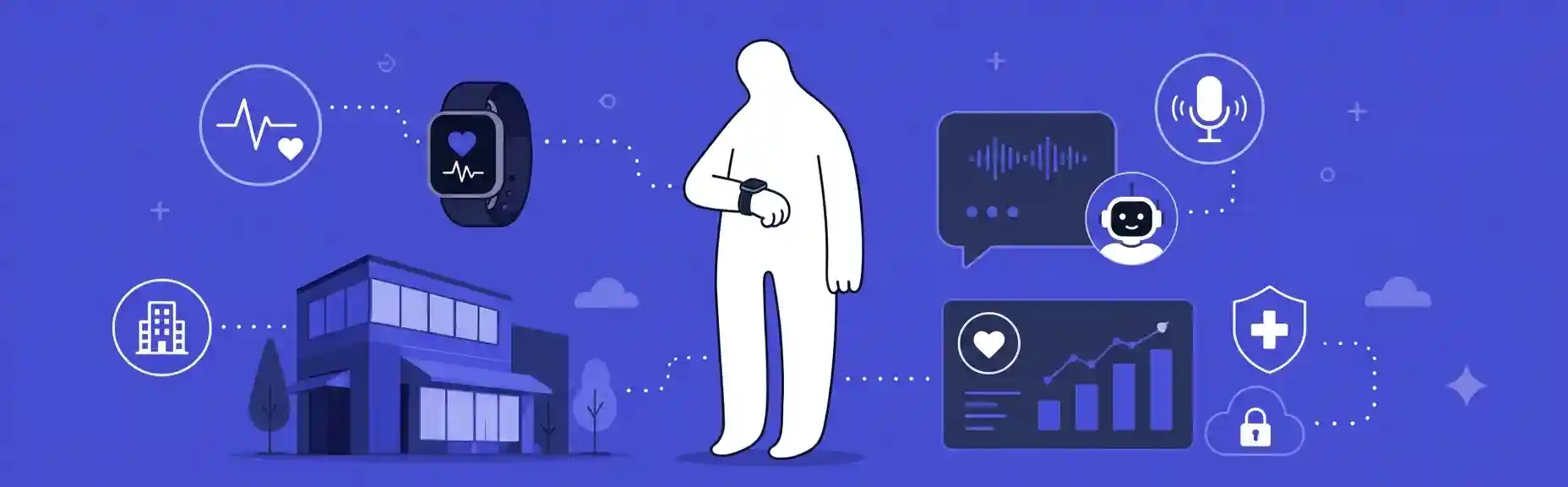
So what does a modern, startup-ready EHR actually need—and why does it matter?
An Electronic Health Record (EHR) system isn’t just an engineering challenge. It’s the digital backbone of care, trust, and life-saving coordination—if it’s built right. The choices you make now shape whether your product accelerates growth… or becomes a costly replatforming nightmare later.
Let’s break down the foundational components of a modern EHR, why they matter to the people who use them, and what startups should watch for.
What Is an EHR, Really?
EHR (Electronic Health Record) is a secure, digital system that collects, stores, and manages patient health information. Think of it as the digital “source of truth” for a patient’s medical journey—visit histories, lab results, medication lists, and communication between care teams.
Unlike old-school paper records or static PDFs, a modern EHR is dynamic, structured, and (ideally) integrates smoothly with other systems. It’s not just a database; it’s a living ecosystem supporting patients, clinicians, and administrators alike.
Most modern EHRs are built on FHIR standards (Fast Healthcare Interoperability Resources), which allow data exchange between labs, pharmacies, insurance providers, and other systems. For founders, this means interoperability isn’t optional—it’s the baseline for scalability.
The Key Building Blocks (and Why They Matter)
Patient Records (Demographics & History)
Every EHR starts with the basics—who is this patient, and what do we know about their health story?
Medical History: Chronic conditions, allergies, family history
Social History: Lifestyle factors, occupation, housing, substance use
Founder Risk: If this isn’t accurate and accessible, care breaks down—and liability rises.
Scheduling & Calendar Tools
Appointments are where administrative friction meets human frustration. Good EHRs offer:
Provider and patient scheduling (visibility into calendars, staff coverage)
Automated reminders and confirmations
Resource allocation (exam rooms, equipment)
Founder Lens: Automated reminders and integrated scheduling aren’t just convenience features—they protect revenue streams, reduce patient frustration, and help startups scale without adding administrative overhead.
Orders & Results Management
Clinicians need systems to request, track, and review diagnostics:
Lab orders and imaging requests
Medication prescribing and refills (e-prescribe)
Result reporting and notification flows
Why It Matters: Clear pathways mean fewer missed tests, faster interventions, and less patient anxiety. Miss this, and you risk trust erosion.
Clinical Notes & Documentation
These are the living record of a clinical encounter—what was discussed, observed, and decided:
Progress notes and visit summaries
Specialty-specific templates (SOAP, DAP, etc.)
Voice dictation, annotation, and tagging
Founder Risk: Poorly designed note systems fuel burnout and risky shortcuts. When notes are intuitive, clinicians save time—and patients gain clarity.
Communication Tools
Care coordination breaks down without safe, easy communication:
Secure messaging and notifications
Automated care plan sharing
Audit trails for compliance
Founder Lens: This is the trust layer. Without it, collaboration falters and compliance risks multiply.
Integration & Interoperability Features
Modern EHRs can’t live in a silo. Look for:
API support (FHIR standards)
Lab, pharmacy, and insurance data exchange
Custom workflows/plugins for unique care models
Why It Matters: Interoperability isn’t just a feature—it’s your insurance policy for scaling into telehealth, wearables, and AI diagnostics down the road.
Analytics & Reporting
It’s not just about storing information—it’s about acting on it:
Quality dashboards and population health tools
Regulatory and compliance reporting
Custom insights for process improvement
Founder Lens: A behavioral health startup spotted high rates of missed visits using built-in analytics, then adjusted its workflows—boosting engagement by 15%. Insight turns data into survival.
For Founders, This Means…
Each of these building blocks isn’t just a technical requirement—they map directly to the pressures you’re managing as a startup:
Time: If workflows aren’t smooth, your clinicians waste hours—and your velocity slows.
Compliance: HIPAA and SOC2 can’t be afterthoughts. Every missing audit trail or unsecured message is a future liability.
Cost: Features that reduce no-shows, missed labs, or documentation friction are the difference between revenue protection and revenue leakage.
Velocity: APIs and interoperability aren’t “nice to have”—they’re how you scale into telehealth, wearables, and AI without costly replatforming.
The takeaway: a modern EHR isn’t just a product feature set—it’s your growth engine.
Building for Humans, Not Just Compliance
A modern EHR isn’t just a list of modules from a vendor checklist. It’s a living product shaped by the needs of clinicians at the bedside, administrators behind the scenes, and—above all—patients trusting the system with their most sensitive information.
Founder Tip: Bake empathy from the start. Run user interviews. Bring clinicians into prototype reviews. Challenge legacy workflows that don’t serve today’s patients. The startups that win aren’t the ones with the most features—they’re the ones that build trust.
Quick Checklist for EHR Startups
Does your platform make patient data easy to find and update?
Are scheduling and communication seamlessly integrated?
Can your EHR talk to labs, pharmacies, and other providers?
Is documentation intuitive and efficient for clinicians?
Will your reporting support compliance and growth?
Whether you’re building from scratch or layering new tools on top, the infrastructure choices you make today shape how fast you can grow tomorrow.
That’s why we built Alternova’s EHR Hosting—to give founders a secure, compliant backbone without DevOps overhead. Because building an EHR shouldn’t feel like reinventing the wheel.
We’re not just building EHR features—we’re building the trust layer for human health.
Used to monitor number of Google Analytics server requests when using Google Tag Manager
1 minute
_gac_
Contains information related to marketing campaigns of the user. These are shared with Google AdWords / Google Ads when the Google Ads and Google Analytics accounts are linked together.
90 days
__utma
ID used to identify users and sessions
2 years after last activity
__utmt
Used to monitor number of Google Analytics server requests
10 minutes
__utmb
Used to distinguish new sessions and visits. This cookie is set when the GA.js javascript library is loaded and there is no existing __utmb cookie. The cookie is updated every time data is sent to the Google Analytics server.
30 minutes after last activity
__utmc
Used only with old Urchin versions of Google Analytics and not with GA.js. Was used to distinguish between new sessions and visits at the end of a session.
End of session (browser)
__utmz
Contains information about the traffic source or campaign that directed user to the website. The cookie is set when the GA.js javascript is loaded and updated when data is sent to the Google Anaytics server
6 months after last activity
__utmv
Contains custom information set by the web developer via the _setCustomVar method in Google Analytics. This cookie is updated every time new data is sent to the Google Analytics server.
2 years after last activity
__utmx
Used to determine whether a user is included in an A / B or Multivariate test.
18 months
_ga
ID used to identify users
2 years
_gali
Used by Google Analytics to determine which links on a page are being clicked
30 seconds
_ga_
ID used to identify users
2 years
_gid
ID used to identify users for 24 hours after last activity